
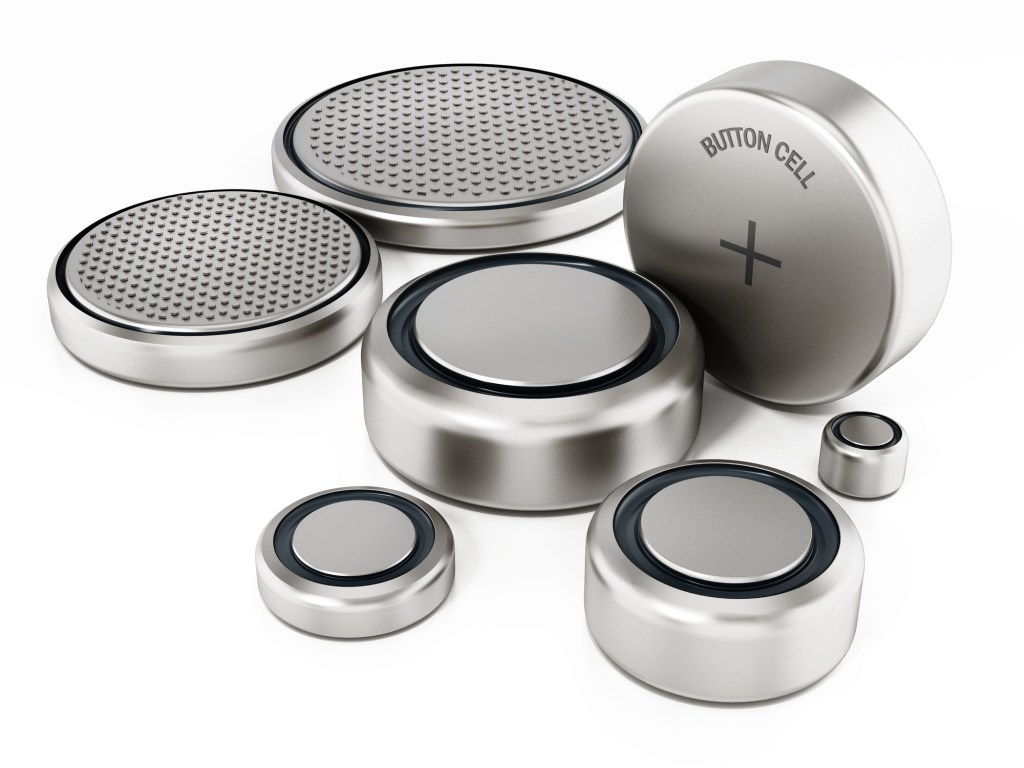
As the holiday season 🎄 🎉 approaches, parents and caregivers, it’s crucial to be vigilant about a hidden hazard in many homes 🏠 : button batteries.
These small, round, silver batteries may look like shiny coins or tempting lollies to young children but pose serious risks.
Where Are Button Batteries Found?
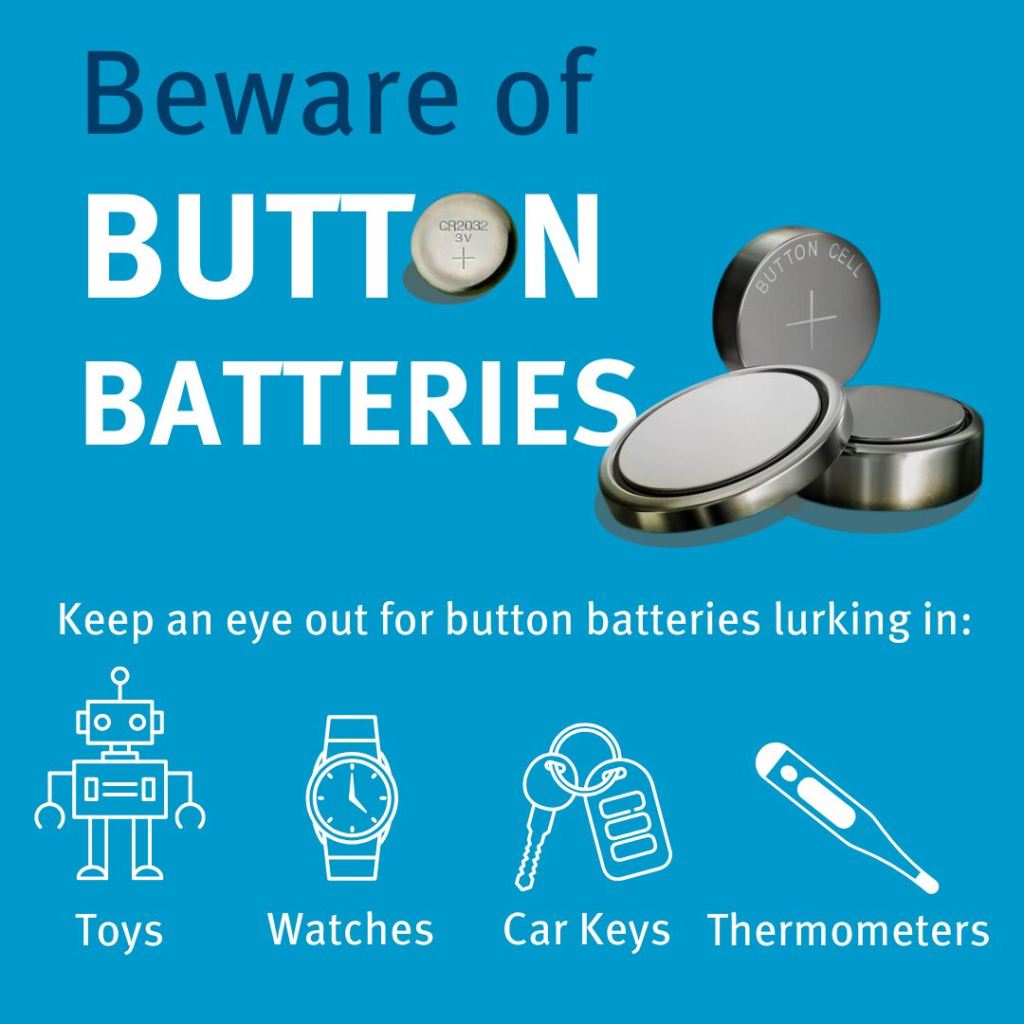
Button batteries power many common household items, including:
- Toys 🧸
- Watches ⌚
- Cameras 📸
- Calculators
- hearing aids👂
- Glucometers
- Reading lights 💡
- ️Car 🚗 keys 🔑
- Remote controls 📱
- musical greeting cards 💌
- Household gadgets 📟 📻
- Electronic thermometers 🌡
- ️Your child’s Christmas presents 🎁
- Electric candles 🕯️ and decorations 🔦
Why Are Button Batteries Dangerous?
It’s important to keep an eye out for button batteries! They pose a serious choking hazard because of their size, which makes them easy for children to put in their mouths 😮 and accidentally swallow, or to push them into their ears 👂or nose 👃.
Batteries have been reported in the:
- ear 👂
- nose 👃
- eye 👁️
- vagina
- bottom
- urethra (tube leading to bladder).
If swallowed or inserted into an ear or nose, button batteries can cause severe burns in less than two hours, and in some cases, even lead to death. Acting quickly is critical.
Warning Signs to Watch For
Symptoms of button battery ingestion or insertion may not always be obvious. However, keep an eye out for:
- Gagging or choking
- Drooling
- Chest pain, which may present as grunting
- Coughing or noisy breathing
- Unexplained vomiting or refusal to eat
- Black or red vomit or bowel movements (bleeding in the gut)
- Nosebleeds (sometimes blood is vomited through the nose)
- Unexplained fever
- Abdominal pain
- General discomfort
- Spitting blood or blood-stained saliva
- Bloody discharge from the ear or nose

Prevention 🚦Strategies
- Buy Safe Products: Try to select products that do not require button batteries or where the button batteries are fully enclosed and non-replaceable. Button battery products should be robust enough to be dropped without breaking.
- Child-resistant packaging: Buy new button batteries in child-resistant packaging—that is, with packaging that needs to be opened with scissors.
- Keep out of reach: Keep spare button batteries locked away out of children’s reach and dispose of used button batteries appropriately.
- Flat batteries are also dangerous: Flat batteries can still be dangerous because they contain enough charge to generate an electrical current once ingested/inserted.
- Disposing of button batteries: Tape button batteries with clear sticky tape and store them in a glass (fire resistant) jar 🫙 that is vented to release any gas 🌬️ . Store this jar out of reach of children prior to taking spent batteries to a recycling facility.
What to Do in an Emergency 🚨
If you suspect your child has swallowed or inserted a button battery, call / contact emergency services or a hospital right away and follow their instructions carefully.
If you are in Australia 🇦🇺 contact the Poisons Information Centre immediately on 📱 13 11 26 for fast expert advice, 24/7.
Important Do’s and Don’ts
❌ Do not let your child eat or drink.
❌ Do not try to induce vomiting.
Stay Safe This Holiday Season
Make sure to inspect your home for button batteries, especially in new toys or devices. Secure them out of reach of children and dispose of used batteries safely.
By staying alert and informed, you can ensure a safe and joyful holiday season for your family. 🎄
Courtesy
Queensland Government. (2024, October 25). Safety alert: Button batteries. Early Childhood Education and Care. https://earlychildhood.qld.gov.au/sector-news-and-resources/news-for-educators-and-service-providers/safety-alert-button-batteries


