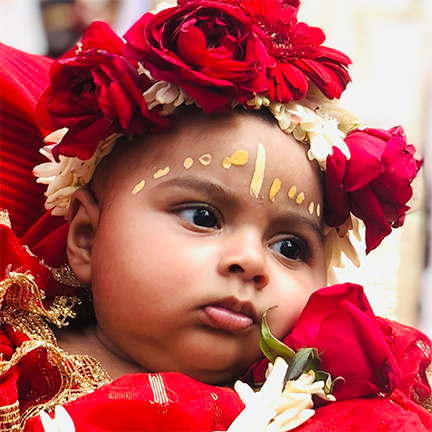
I am Sajal Kanti Ghosh, father of Durga, my first daughter 👶. Watching her grow has been a fascinating journey, especially as she explores the world of language. Today, I’m excited to share the story of my 15-month-old daughter’s vocabulary adventure. Along with this, I’ll reveal the strategies and techniques I’ve been using to help her transition from babbles to words. To make this journey more vivid, I’ve included audio 🎼 and video 📹 clips showcasing her sweet voice.
Table of Contents
Language and communication skills are critical milestones in a toddler’s development. These skills enable children to express themselves, understand others, and engage with the world around them. From babbling to forming complete sentences, a toddler’s journey of language acquisition is shaped by a combination of biological, environmental, and social factors.
This blog is divided into two parts:
- Part 1: I’ll discuss the theoretical and scientific aspects of toddler language milestones, providing insights into the stages of language development and the research behind it.
- Part 2: I’ll share my personal experiences, including practical strategies and real-life examples that you can try with your own child.
Let’s dive into this fascinating topic and uncover how we can nurture our toddlers’ language skills naturally and effectively!
Part 1: Language and Communication Milestones
Language and communication development are foundational skills that shape a toddler’s ability to connect with others and thrive academically and socially. By understanding the stages of language acquisition, recognizing influencing factors, and implementing evidence-based strategies, caregivers can support their toddler’s linguistic journey.
Stages of Language Development
Language development in toddlers occurs in distinct stages, each marked by significant milestones:

12 Months
- Toddlers understand about 10 words, respond to their name, and recognize greetings like “hi” and “bye-bye”.
- They can recognize familiar people and objects (e.g., “mummy,” “teddy”) and make eye contact.
- They start using sounds, gestures, and say a few words while continuing to babble and copy different sounds.
18 Months
- By 18 months, toddlers can understand up to 50 words and simple phrases. They follow basic instructions like “throw the ball” and point to familiar objects when named.
- Their spoken vocabulary expands to 6–20 single words, and they begin to name body parts and use objects in pretend play.

24 Months
- At 2 years, toddlers can follow simple two-part instructions (e.g., “give me the ball and the car”), answer simple “what” and “where” questions, and point to several body parts and pictures in books when named.
- Their vocabulary exceeds 50 single words, and they combine two words into simple “sentences” such as “bye teddy” or “no ball.” They use various consonants and vowels and start to assert possession with words like “mine” and “my.”
Research highlights that toddlers communicate through words, gestures, and tone, and by age two, their speech becomes more understandable (Raising Children Network, 2023).
Significant Language Milestones
- First Words: Most toddlers speak their first word between 10 to 14 months, with a rapid increase in vocabulary thereafter.
- Gestures and Naming: By 12–18 months, toddlers combine gestures with words to convey meaning and begin naming familiar objects and body parts.
- Listening and Comprehension: Toddlers enjoy being read to, listening to songs, and following simple directions. They increasingly understand and respond to spoken language.
- Word Acquisition: Vocabulary development accelerates after 18 months, often resulting in a “word spurt” once they reach 50 words (Kaplan, 2018).
Strategies to Foster Language and Communication Skills
Parents and caregivers play a pivotal role in fostering language development. Here are evidence-based strategies to support your toddler:
Everyday Interactions
Singing: In this video, I am singing a song while clapping along to the lively rhythm, and my little daughter is dancing along with me. The song and dance are helping my daughter develop her 𝗰𝗼𝗼𝗿𝗱𝗶𝗻𝗮𝘁𝗶𝗼𝗻, 𝗿𝗵𝘆𝘁𝗵𝗺, 𝗮𝗻𝗱 𝗹𝗮𝗻𝗴𝘂𝗮𝗴𝗲 𝘀𝗸𝗶𝗹𝗹𝘀, as well as her appreciation for music and culture
- Sing Songs: Songs and rhymes enhance phonemic awareness and language rhythm.
- Narrate Activities: Describe daily activities to expose your child to a variety of words and contexts.
- Read Books: Reading regularly introduces new vocabulary and builds listening skills.
- Imitate Sounds and Actions: Mimicking your child’s babbles or actions shows engagement and encourages turn-taking.
- Expand and Recast: If your child says “red truck,” expand on it with “Yes, a big red truck,” to model more complex language structures.


Play and Social Engagement
- Play Pretend: Use imaginative play to introduce new vocabulary and concepts.
- Encourage Storytelling: Invite your toddler to describe events or make up stories to practice narrative skills.
- Use Finger Puppets: These tools can make communication engaging and interactive.
Interactive Communication
- Ask Open-ended Questions: Stimulate conversation by prompting your child to think and respond.
- Model Proper Speech: Speak clearly and avoid baby talk to set a strong example of language use.
- Encourage Gestures: Use gestures to complement speech, aiding comprehension.
These techniques help toddlers connect words to meaning, organize thoughts, and build confidence in communication (Speech Pathology Australia, 2024).
When to Seek Professional Help
While every child develops at their own pace, consult a child health professional if you notice significant delays in language milestones, such as:
- Limited vocabulary or inability to combine words by age two.
- Difficulty understanding simple instructions.
- Lack of gestures or social interaction.
Part 2: Insights from My Parenting Journey
Her Sweet Voice: List of Vocabularies of My Daughter
| Word / Sound | Meaning / Explanation and Note | Audio |
|---|---|---|
| মা (Ma) | Mom (This audio was recorded on August 8, 2024. At that time, my daughter had a high fever. She was calling for her mom with a sad face and tears in her eyes, requesting to hug her, take her on her lap, and take care of her by breastfeeding.) | |
| বাবা (Baba) | Father | |
| কি? (Ki?) | What is this? | |
| বেবি (Baby) | Baby | |
| আপেল (Apel) | Apple Fruit | |
| আই লো – I Lo | I love you | |
| কোকিল (Kokil) | Cuckoo (Bird) | |
| কোকিলের ডাক – কুহু কুহু (Kuhu Kuhu) | Cuckoo Sound | |
| না না না না ( Na Na Na Na) | No No No No | |
| থাক্কু (Thakku) | Thank You | |
| ভাই (Vai) | Brother | |
| ২, ৫, ৬ (Dui, Pat, Choy) | Two, Five, Six | |
| বই (Boi) | Book | |
| বল (Bolo) | Say | |
| দাদু (Dadu) | Grand father | |
| কুকুরের ডাক – ঘেউ ঘেউ | Dog Barking Sound | |
| এই মা (Ei Ma) | Hey Mom | No Audio |
| এই বাবা (Ei Baba) | Hey Father | No Audio |
| মামা (Mama) | Maternal Uncle | No Audio |
| মাকী (Maki) | মাসী / Maternal Aunt | No Audio |
| মু (Mu) | মুড়ি / Puffed rice. | No Audio |
| মুমু (Mumu) | Name of her aunt | No Audio |
| মনা (Mona) | Baby | No Audio |
| মাম (Mum) | Water | No Audio |
| মা কই? (Maa koi?) | Where is my mom? | No Audio |
| কাকা (Kaka) | Uncle | No Audio |
| এই? (Ei?) | Hey? | No Audio |
| এই যে! (Ei je!) | Hey you | No Audio |
| এটা কে? (Eta Ke?) | Who is this? | No Audio |
Conclusion
Supporting a toddler’s language, vocabulary, and communication skills is a rewarding journey that lays the foundation for lifelong learning and social interaction. By understanding developmental milestones and employing effective strategies, parents and caregivers can nurture their child’s ability to connect with the world around them.
References
Kaplan, D. A. (2018). Language Milestones: 1 to 2 Years. Healthline. Retrieved 19 January from https://healthline.com/health/baby/toddler-language-milestones
Raising Children Network (Australia) Limited. (2023). Language development: 1-2 years. Retrieved from https://raisingchildren.net.au/toddlers/development/language-development/language-1-2-years
Speech Pathology Australia. (2024). Communication milestones. Retrieved from https://speechpathologyaustralia.org.au/Public/Public/Comm-swallow/Speech-development/Communication-milestones.aspx


Leave a Reply