Preparing children for an unpredictable future is one of the greatest challenges parents face. Françoise Dolto, a visionary French physician and psychoanalyst, provides timeless insights into how to nurture a child’s individuality and equip them with the tools to thrive in an ever-changing world. This article delves into Dolto’s key principles and practical advice, supported by scientific research, to guide parents in this important task.
Understanding Dolto’s Approach
Dolto’s philosophy was deeply influenced by psychoanalysis, particularly the works of Sigmund Freud (1924/2010) and Jacques Lacan (1969). She believed that children are unique individuals with their own perspectives, and that traditional methods of education often suppress their natural curiosity and creativity. Her ideas align with modern research emphasizing the importance of autonomy and emotional connection in child development (Deci & Ryan, 2000; Bowlby, 1982).
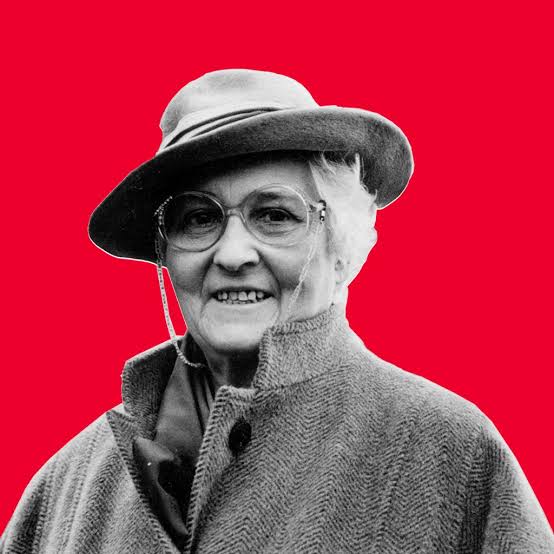
Françoise Dolto
Françoise Dolto was born on 6 November 1908 in Paris, France. Starting to work analytically as a Paediatrician in 1937, Dolto belongs to the second generation of French analysts, and like Winnicott, worked intensively in Paediatric liaison. Françoise Dolto was one of the pioneers of child psychoanalysis, bringing innovative contributions that changed the way we understand the emotional development of children. She integrated psychoanalysis with pediatrics, proposing that children’s symptoms often reflected family traumas and dynamics. Dolto stated that babies and young children already possessed a body and emotional language that preceded speech.
In Context
Approach: Psychoanalysis
- 1924 Sigmund Freud theorizes about the castration anxiety children face, which Dolto says is a factor in our unconscious image of our own bodies.
- 1969 Jacques Lacan investigates “otherness,” which becomes central to Dolto’s work focusing on the distinctiveness of individuals.
After
- 1973 A school based on Dolto’s theories opens in La Neuville-du-Bosc, France, emphasizing well-being and non-compulsory activities.
- 1978 La Maison Verte, a daycare center based on Dolto’s ideas, opens in Paris, with the aim of helping parents and children to minimize the adverse effects of separation.
Dolto’s central tenet was that children’s emotional well-being hinges on their ability to express themselves freely. She argued that many childhood illnesses stem from emotional disconnection between parents and children. This perspective finds support in attachment theory, which highlights the role of secure parent-child relationships in fostering resilience (Mikulincer & Shaver, 2016).
Why the Future is Unpredictable
Dolto’s statement, “We prepare children for a life about whose course we know nothing,” underscores the need for adaptable and creative approaches to parenting. In an age of rapid technological advancements and shifting societal norms, it is impossible to predict the challenges children will face. Therefore, instead of focusing on rigid skill sets, parents should aim to cultivate their child’s ability to think critically, solve problems, and adapt to new situations.
“We prepare children for a life about whose course we know nothing“
Françoise Dolto
Research supports this idea, showing that children raised with autonomy and opportunities for exploration tend to develop greater adaptability and self-confidence (Ryan & Deci, 2017; Grolnick, 2003). Bronfenbrenner’s (1979) ecological systems theory further emphasizes that children’s development occurs within a dynamic and interconnected environment, reinforcing the need for flexible parenting approaches.
How to Prepare a Child for an Unpredictable Future: The Role of Parents
For Dolto, the role of parents and educators is not to impose their own visions of success but to guide children toward self-discovery. Adults should model behaviors such as resilience, curiosity, and empathy, allowing children to learn through observation and experience. Bandura’s (1986) social learning theory supports this approach, highlighting the influence of role models in shaping children’s development.

To prepare children for an unpredictable future, parents can:
- Encourage Open Expression: Foster an environment where children feel safe sharing their thoughts 🧠 and emotions. This builds emotional intelligence and strengthens the parent-child bond (Rohner, 2004).
- Promote Problem-Solving Skills: Provide opportunities for children to tackle challenges independently, helping them build confidence and critical thinking skills (Harter, 2012).
- Celebrate Individuality: Recognize and nurture your child’s unique interests and talents. Avoid comparisons with others, as this fosters intrinsic motivation and self-worth (Vygotsky, 1978).
- Support Autonomy: Allow children to make decisions within reasonable boundaries. Research shows that autonomy-supportive parenting leads to better psychological and academic outcomes (Deci & Ryan, 2000).
Conclusion
Preparing children for an unpredictable future requires a shift in focus from rigid expectations to fostering adaptability, creativity, and emotional intelligence. Françoise Dolto’s insights provide a valuable framework for parents seeking to nurture these qualities in their children. By encouraging individuality, supporting autonomy, and modeling positive behaviors, parents can empower their children to navigate life’s uncertainties with confidence and resilience. As Dolto wisely noted, “It is too late to make a difference with adults; the work has to be done with children.”
References
Bandura, A. (1986). Social foundations of thought and action: A social cognitive theory. Prentice-Hall. https://psycnet.apa.org/record/1985-98423-000
Bowlby, J. (1982). Attachment and loss: Vol. 1. Attachment (2nd ed.). Basic Books. https://mindsplain.com/wp-content/uploads/2020/08/ATTACHMENT_AND_LOSS_VOLUME_I_ATTACHMENT.pdf
Bronfenbrenner, U. (1979). The ecology of human development: Experiments by nature and design. Harvard University Press. https://www.hup.harvard.edu/books/9780674224575
Collin, C., Benson, N., Ginsburg, J., Grand, V., Layzan, M., & Weeks, M. (2012). The psychology book. Dorling Kindersley Ltd.
Deci, E. L., & Ryan, R. M. (2000). The “what” and “why” of goal pursuits: Human needs and the self-determination of behavior. Psychological Inquiry, 11(4), 227–268. https://doi.org/10.1207/S15327965PLI1104_01
Dolto, F. (1990). La cause des enfants [The cause of children] (B. Wright, Trans.). Robert Laffont. (Original work published 1985)
Freud, S. (2010). Beyond the pleasure principle (J. Strachey, Trans.). W. W. Norton & Company. (Original work published 1924)
Grolnick, W. S. (2003). The psychology of parental control: How well-meant parenting backfires. Psychology Press.
Harter, S. (2012). The construction of the self: Developmental and sociocultural foundations (2nd ed.). Guilford Press. https://psycnet.apa.org/record/2012-12728-000
Lacan, J. (1969). Écrits: A selection (A. Sheridan, Trans.). W. W. Norton & Company.
Mikulincer, M., & Shaver, P. R. (2016). Attachment in adulthood: Structure, dynamics, and change (2nd ed.). Guilford Press.
Rohner, R. P. (2004). The parental “acceptance-rejection syndrome”: Universal correlates of perceived rejection. American Psychologist, 59(8), 830–840. https://doi.org/10.1037/0003-066X.59.8.830
Ryan, R. M., & Deci, E. L. (2017). Self-determination theory: Basic psychological needs in motivation, development, and wellness. Guilford Press.
Vygotsky, L. S. (1978). Mind in society: The development of higher psychological processes. Harvard University Press


Comments
One response to “How to Prepare a Child for an Unpredictable Future: Lessons from Françoise Dolto”
[…] How to Prepare a Child for an Unpredictable Future: Lessons from Françoise Dolto […]
LikeLike