
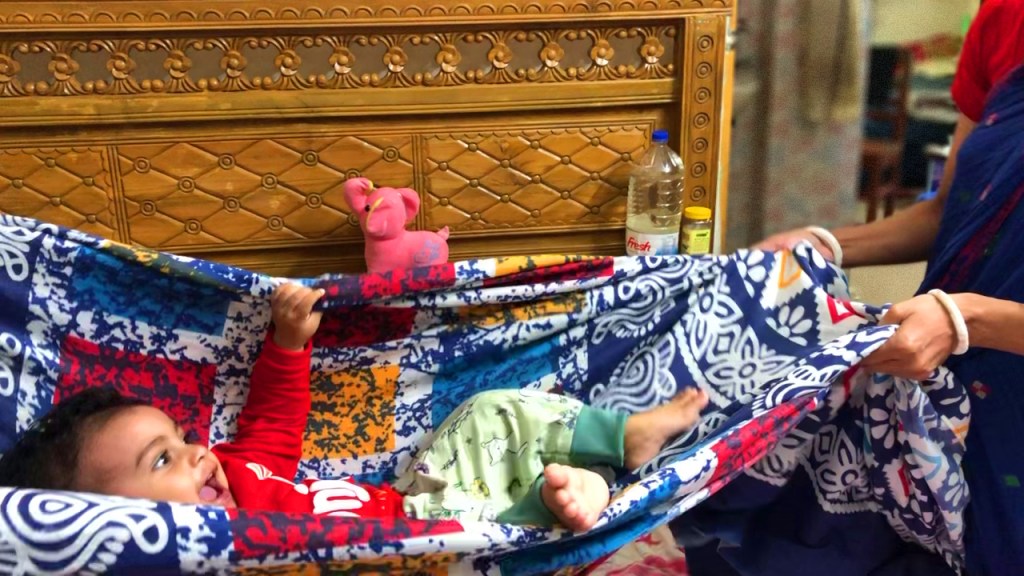
Vestibular input refers to the sensory information received by the vestibular system in the inner ear 👂, which helps regulate balance, coordination, and spatial awareness. For babies and toddlers, activities that stimulate the vestibular system are crucial for developing gross motor skills 🔗, body awareness, and even emotional regulation 🔗. One popular and engaging activity that provides vestibular input is blanket swinging.
In this blog, we will explore the benefits of vestibular input, the science behind it, and how blanket swinging can be a safe and enjoyable activity to support your child’s development.
What Is Vestibular Input?
The vestibular system is the first sensory system to develop in utero, and its stimulation has been shown to impact overall neural development positively (Ayres, 2005). It is located in the inner ear 👂 and it plays a vital role in processing sensory information related to movement, gravity, and spatial orientation. It helps children:
- Maintain balance and posture
- Develop coordination and motor skills 🔗
- Enhance spatial awareness and body control
Babies and toddlers rely heavily on vestibular input to explore their environment, develop motor milestones 🔗, and interact with the world 🌍around them.
Benefits of Vestibular (Stimulation) Activities
Studies have shown that vestibular stimulation is linked to better motor and cognitive outcomes in young children, as it influences brain development and sensory processing (O’Brien & Kuhaneck, 2019). Activities that engage the vestibular system offer a range of developmental benefits, including:
- Improved Balance and Coordination: Regular vestibular stimulation strengthens the neural connections responsible for maintaining balance.
- Enhanced Motor Skills: Activities like swinging or spinning can improve gross motor skills, such as walking, running, and jumping.
- Emotional Regulation: Gentle vestibular stimulation has a calming effect on children, helping them manage emotions and reduce stress.
- Sensory Integration: Vestibular activities help children process sensory information more effectively, supporting overall sensory integration.
What Is Blanket Swinging?
Blanket swinging involves placing a baby or toddler on a sturdy blanket and gently swinging them back and forth. This activity is an excellent way to provide vestibular input in a safe, controlled environment.
How to Set Up a Blanket Swing
- Choose a strong, durable blanket.
- Ensure there are two adults to hold either end of the blanket securely.
- Place the child in the center of the blanket, ensuring they are comfortable and supported.
- Gently swing the blanket back and forth or side to side.
Benefits of Blanket Swinging
Research suggests that swinging activities can enhance a child’s ability to process vestibular and proprioceptive input, leading to improved coordination and sensory integration (Parham & Mailloux, 2010).
- Vestibular Stimulation: The swinging motion stimulates the vestibular system, promoting balance and spatial awareness.
- Bonding Time: This activity fosters a sense of connection and trust between the child and caregivers.
- Calming Effect: The rhythmic motion of swinging can have a soothing effect, making it a great activity for winding down.
- Physical Development: Engaging core muscles during swinging helps improve posture and body control.
Incorporating Vestibular Activities into Daily Life
While blanket swinging is a fantastic way to provide vestibular input / stimulation, there are other activities you can include in your child’s routine:
- Rocking chairs or gliders
- Gentle bouncing on an exercise ball
- Swings at the park
- Crawling through tunnels or over cushions
- Rolling on soft surfaces
These activities can complement blanket swinging and provide varied sensory experiences for your child.
Caution!
- Always supervise the child during the activity.
- Avoid sudden or jerky movements.
- Keep swings gentle and age-appropriate. Too much stimulation (swinging) can generate stress that is detrimental to brain development (Parham & Mailloux, 2010).
- Before, during, and after vestibularstimulation, the child should be checkedfor evidence of over stimulation or understimulation and allowed to determine his / her own speed (Mittal & Narkeesh, 2012).
Conclusion
Vestibular input is a cornerstone of early childhood development, influencing everything from motor skills to emotional regulation. Activities like blanket swinging offer a simple, enjoyable, and scientifically-supported way to engage the vestibular system and support your child’s growth.
By incorporating vestibular activities into your child’s routine, you can help them build strong foundations for balance, coordination, and sensory integration—all while creating cherished memories together.
References
Ayres, A. J. (2005). Sensory Integration and the Child: Understanding Hidden Sensory Challenges. Western Psychological Services.
Mittal, R., & Narkeesh, A. (2012). Review study on effect of stimulation of vestibular apparatus on postural muscle tone in cerebral palsy. Journal of Exercise Science and Physiotherapy, 8(1), 11. https://doi.org/10.18376//2012/v8i1/67600
O’Brien, J. C., & Kuhaneck, H. (2019). Case-Smith’s Occupational Therapy for Children and Adolescents-E-Book. Elsevier Health Sciences.
Parham, L. D., & Mailloux, Z. (2010). Sensory integration. In J. Case-Smith & J. C. O’Brien (Eds.), Occupational Therapy for Children (6th ed., pp. 325-372). Mosby/Elsevier.


Leave a comment