
Supervised tummy time plays a vital role in your baby’s early physical development. It strengthens the muscles in their neck, shoulders, arms, and back, which are essential for key milestones like rolling over, sitting up, crawling, and eventually walking. Additionally, tummy time provides babies with a new way to visually explore their surroundings. Instead of just seeing the ceiling while on their back, they can lift their head and observe the world from a new angle—at eye level.

Tummy time, however, isn’t always easy for newborns. Some may initially resist or seem uncomfortable, but introducing a variety of fun and engaging activities can make tummy time more enjoyable. Below are three tummy time activities that encourage muscle development and enhance the bonding experience with your baby.
Activity #1: Tummy to Tummy – Bonding and Strengthening Early On
Introducing tummy time during the first days in the hospital can help your baby get accustomed to this position early. One great way to start is by lying your newborn on your chest, tummy to tummy, while you are awake and in a reclined position on a chair, bed or floor (with a pillow to support your head). This early exposure helps normalize the tummy position, making your baby more comfortable as they grow.
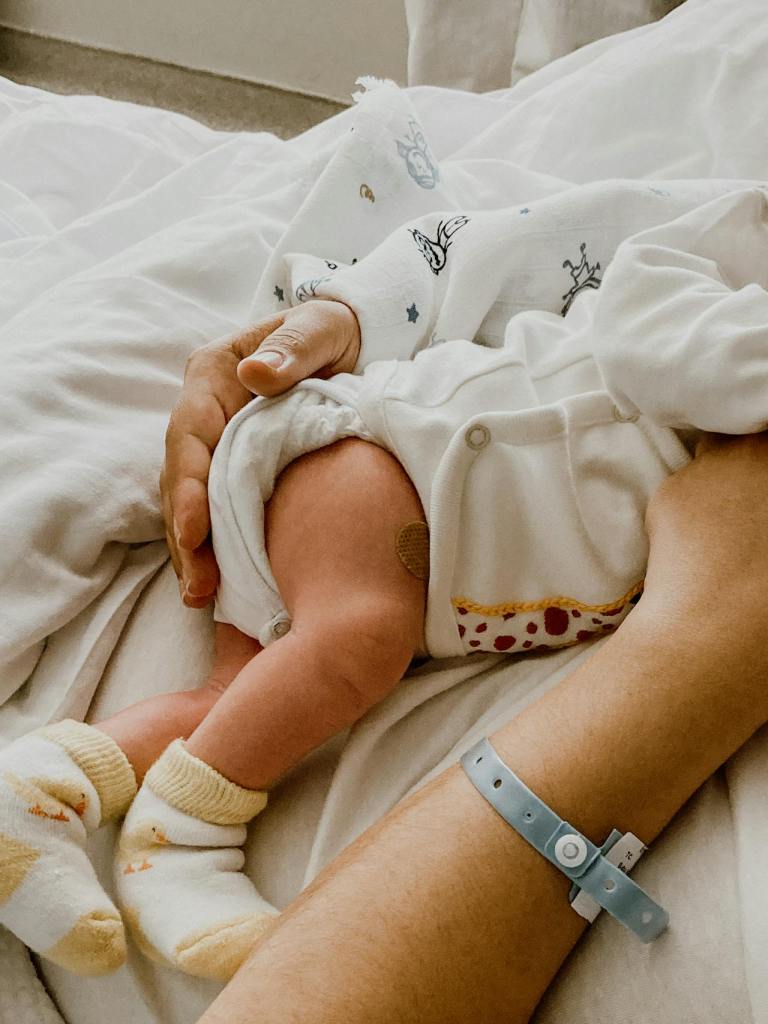
This position also promotes emotional bonding. Make the most of this time by engaging with your baby through eye contact, animated expressions, and gentle talking. According to research, skin-to-skin contact during the early weeks is associated with improved cognitive development and stronger parent-infant bonding.
How to do it:
- Lay back in a reclined position with your baby on your chest.
- Make eye contact, smile, and talk to your baby.
- Start with short sessions and gradually increase the duration.
Activity #2: Lap Time – Gentle Movements for Relaxation
If your baby isn’t fond of being on their tummy on the floor, try placing them tummy-down on your lap. This position provides the needed head and body support while still allowing your baby to practice lifting their head. The gentle movement of your legs can be soothing and help them associate tummy time with relaxation.
This activity is particularly effective for babies who need a little extra comfort or a calming environment.
How to do it:
- Lay your baby tummy-down across your lap, ensuring their head is aligned with their body.
- Gently lift and lower your legs, or move them from side to side for added stimulation.
- If your baby falls asleep, transfer them to a safe sleep surface on their back.
Activity #3: Side-Lying with Support – A Gentle Alternative to Tummy Time
For babies who struggle with tummy time, side-lying is a great alternative. It allows your baby to strengthen the same muscle groups while avoiding any discomfort they might experience on their tummy.

To set up this activity, place your baby on their side on a soft blanket. You can use a rolled-up towel to prop their back and ensure both arms are in front of them. This position encourages your baby to explore their surroundings and practice moving their head and arms.
How to do it:
- Lay your baby on a soft blanket on their side.
- Use a small towel for back support and a washcloth under their head if necessary.
- Ensure their legs are bent slightly at the hips to make them comfortable.
- Engage your baby with toys or read them a story to keep them entertained.
Key Reminders for Safe and Effective Tummy Time
It’s important to vary your baby’s positions throughout the day. Whether it’s tummy time, side-lying, or simply being held in your arms, changing their position helps strengthen different muscles and prevents any potential flat spots on their head (positional plagiocephaly) . Try to incorporate these positions during regular activities, such as after naps, diaper changes, or bath time.
Caution
- If your baby was born premature or has reflux disease or special needs, speak with your child’s pediatrician about tummy time. Some babies need special consideration.
- Once your baby starts participating in tummy time, be sure to provide supervision. In this world of distractions, your phone will ring or you’ll get called to another room. Just remember to stay with your baby to avoid suffocation.
Final Thoughts
Tummy time doesn’t just support your baby’s physical development—it also offers an opportunity for bonding and emotional interaction. Babies thrive on connection, and through activities like tummy to tummy, lap time, and side-lying, you’re not only helping them build essential motor skills but also deepening your bond with them.
Make tummy time a regular part of your daily routine, ensuring that it’s fun and engaging for both you and your baby. With patience, creativity, and consistency, tummy time can become a special time for you to share in your baby’s early milestones.
References
American Academy of Pediatrics. (2016). “Back to Sleep, Tummy to Play: Why Tummy Time is Important.” HealthyChildren.org.
Feldman, R., Eidelman, A. I., Sirota, L., & Weller, A. (2002). “Skin-to-skin contact (kangaroo care) promotes self-regulation in premature infants: Sleep–wake cyclicity, arousal modulation, and sustained exploration.” Developmental Psychology.


